
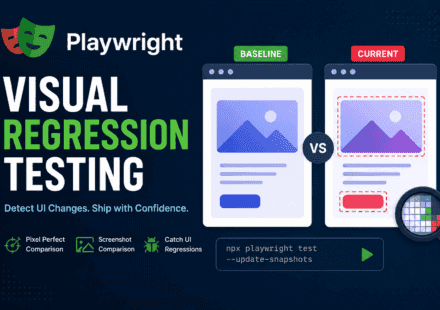
Playwright Visual Regression Testing: Complete Guide (2026)

Introduction: Why “It Looks Fine to Me” Isn’t a Testing Strategy I’ve lost count of how many times a functional test suite has gone fully green while the actual product shipped with a broken layout. A button overlapping text. A…
Read More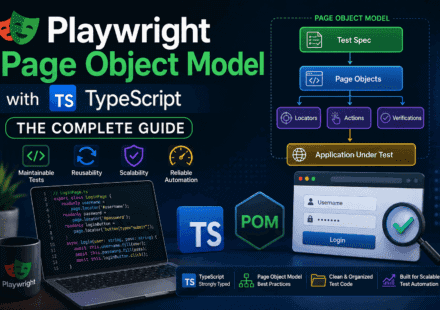
Playwright Page Object Model with TypeScript: The Complete Guide
This guide is written for QA engineers, SDETs, and automation architects who already know the basics of Playwright and TypeScript and want to build something that survives contact with a real product team — one where the UI changes every sprint, three…
Read More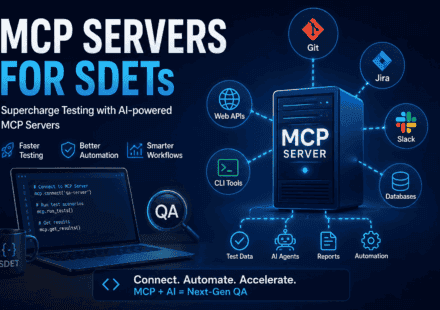
MCP Servers for SDETs: What They Are & Why They Matter (2026)
Introduction: Why MCP Servers for SDETs Is the Conversation of 2026? If you have spent any time in a test automation Slack channel, a QA conference hallway, or a release-readiness standup in the first half of 2026, you have probably heard the phrase “MCP…
Read More
AI-Powered Test Maintenance: Stop Fixing Broken Selectors Manually
Introduction: The 2 AM Slack Message Every QA Manager Dreads It is 2 AM. Your nightly regression suite has just finished running, and the CI dashboard is a wall of red. Forty-three tests failed. You already know, before you even open the report, that…
Read More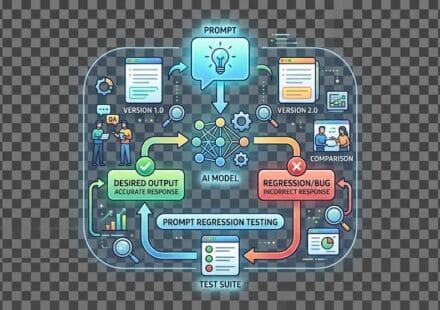
Prompt Regression Testing 101: Catching AI Output Drift Before Production
If you have shipped anything backed by a large language model, you already know the feeling. Everything works in your demo. QA signs off. You deploy. Two weeks later, a prompt gets “improved” by a teammate, a model provider quietly updates a…
Read More
Self-Healing Tests in Playwright: How They Work & How to Implement Them
Honest disclaimer before we start: I have spent a genuinely embarrassing number of hours debugging test failures that had absolutely nothing to do with the application under test. The button was right there on the screen. The user could click it. My…
Read More
TypeScript vs Java for SDET 2026: Which Should You Learn First?-QaTribe
The TypeScript vs Java debate is one of the most common conversations in modern software development. Both are strongly-typed, object-oriented languages that enforce discipline and structure — yet their syntax, ecosystem, and runtime…
Read More